



On the leash
6 mins read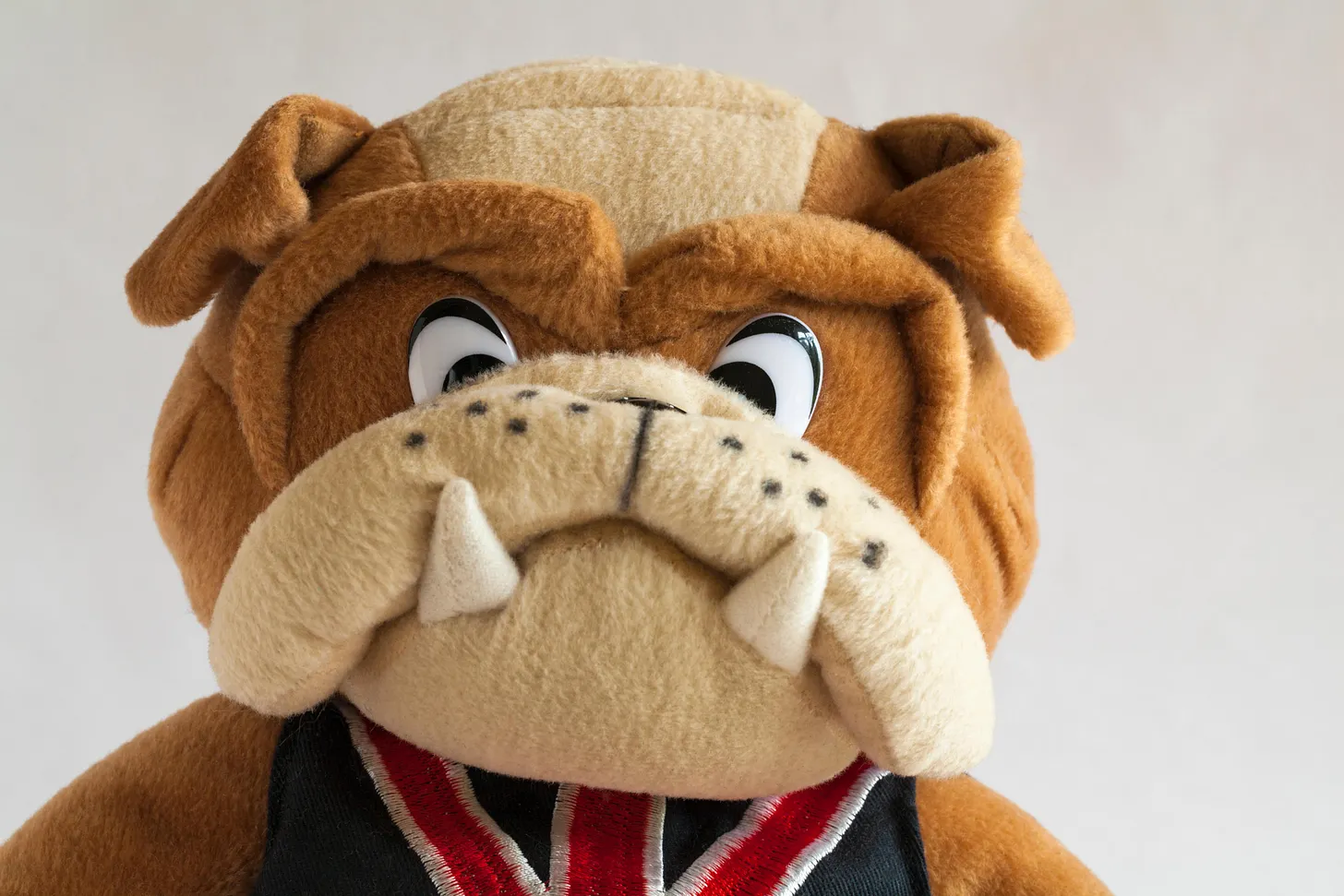
Woof: IG Group’s acquisition of Underdog sees the UK-listed retail trading group pay an upfront enterprise value of ~$1.1bn, plus a potential $200m earnout, for a business spanning DFS, prediction markets, brokerage, exchange and clearing.
- For one sector commentator who requested anonymity, the transaction gives IG a “running start” in a market where both customer acquisition and product development will become increasingly expensive.
- “The theory of M&A is you start at zero and you want to get to one,” they said.
- IG could have attempted that itself, but doing so would have involved capital, time and uncertainty. Through Underdog, “they are buying time and certainty.”
- That certainty applies to execution rather than the market itself. Underdog’s two principal products both face regulatory and competitive questions that IG cannot control.
Buying in: The upfront valuation represents 2.4x Underdog’s ~$466m of net revenue in the 12 months to June, up 21% YoY. The business generated $122m of revenue and $46m of EBITDA in Q2, having first become EBITDA-positive during Q1.
- IG will issue ~24.1 million new shares to fund 60% of the consideration and pay around $380m in cash. It will also repay ~$160m of Underdog debt.
- The earnout requires Underdog to generate 2026 NGR of between $533m and $600m while remaining EBITDA-positive.
- Underdog shareholders are not exiting entirely: they will own ~6.8% of the enlarged IG.
- A separate employee incentive plan could pay as much as $850m, but only if EBITDA reaches at least $400m in 2028 and $700m in 2029.
Who’s a good ’dog? Founded by Jeremy Levine in 2020, Underdog first established itself as the number-two operator in the pick’em-style DFS market. Its attempt to enter state-regulated sports betting was later abandoned.
- However, the company subsequently found a route to national scale through federally regulated event contracts.
Underdog launched prediction markets in September 2025 and says it has become the third-largest US venue by regulated notional volume flow across prediction markets and DFS combination trades, behind Kalshi and Robinhood.
- It has around one million average monthly active users, more than five million depositing customers and over 11 million registered accounts.
- Prediction markets generated 54% of handle during H1.
Traction engine: Matt Restivo, CEO of OddsJam, said the deal was “no surprise” given Underdog’s execution and reputation as a partner. “What deserves more attention is the liquidity position they’ve built in prediction markets, behind only Kalshi and Robinhood since the fall,” he added.
- “That traction doesn’t happen by accident.”
The scaffold: Crucially, Underdog also owns futures commission merchant, designated contract market and derivatives clearing organization licenses. Its proprietary exchange launched in July, creating a vertically integrated brokerage, exchange and clearing operation.
- As the industry commentator put it, IG is buying “a sports-betting sensibility,” a full-stack platform, regulatory scaffolding and a complete operating team.
Two for the money: Paul Leyland of Regulus Partners suggested the valuation effectively offers IG two chances to win. “If DFS 2.0 comes under regulatory and competitive pressure but prediction markets thrive, or – less likely – vice versa, this will be a smart deal,” he said.
- The problem arises if both propositions falter.
- DFS pick’em products face growing regulatory pressure, partly because prediction markets have weakened the argument that they provide the only widely available alternative to state-licensed sportsbooks.
- Sports-event prediction markets, meanwhile, remain embroiled in litigation over whether federal derivatives regulation preempts state gambling laws.
Un-picked: The obvious comparison for yesterday’s deal is PrizePicks, Underdog’s larger DFS rival. In September 2025, European lottery group Allwyn agreed to pay $1.6bn for a controlling 62.3% stake, valuing PrizePicks at $2.5bn.
- A further performance-related payment of up to $1.55bn could take Allwyn to full ownership and lift the valuation to $4.15bn.
- PrizePicks had generated $339m of adj. EBITDA in the preceding 12 months, producing an initial valuation of more than 7x EBITDA.
- Against that benchmark, IG is paying less for Underdog: around 9x annualized EBITDA before the earnout.
- But it is acquiring a business with a more developed prediction market position and its own exchange, brokerage and clearing infrastructure.
The Europeans are coming: The two transactions also follow the same strategic pattern: established European gaming and trading groups buying US sports engagement platforms rather than attempting to build consumer scale from scratch.
- Leyland said it was “almost impossible” for IG to ignore prediction markets given Robinhood’s rapid expansion, but described using a DFS operator as its entry point as bold.
- Underdog does not provide effortless growth either and Leyland noted IG itself grew revenue by 18% in H1, broadly matching Underdog’s recent rate.
- The supposedly boring incumbent is not buying growth because its core business has stalled.
Madagascan varieties: What it is buying is optionality. The commentator believes prediction market products must become more entertaining than their current “vanilla” form, particularly because most customers will not win consistently.
- Underdog’s consumer instincts and product development record may therefore matter as much as its licenses.
What is IG? IG began as a financial spread-betting business and remains best known for leveraged OTC products, particularly contracts for difference. It now offers a broader mix of stocks, options, futures and crypto, with around one-fifth of group revenue already generated in the US.
- The Underdog acquisition will more than double that US revenue and increase IG’s monthly active US customers more than tenfold.
- On a pro-forma 2025 basis, the US would have contributed ~40% of combined revenue, while prediction markets and DFS would have represented around one-quarter of group net trading revenue.
- The strategic logic is convergence. IG can introduce Underdog’s sports-led audience to tastytrade’s options, futures, stocks and crypto products, while extending the acquired infrastructure into financial, political, cultural and macroeconomic contracts.
Life of Breon: This is not CEO Breon Corcoran’s first journey across the boundary between trading and betting. After beginning his career in derivatives trading at JP Morgan and Bankers Trust, he joined Paddy Power in 2001, eventually becoming chief operating officer.
- He became Betfair CEO in 2012 and led the 2016 merger with Paddy Power, becoming chief executive of Paddy Power Betfair, the business renamed Flutter Entertainment in 2019.
- He later led payments group Zepz before joining IG in 2024.
We got history: Corcoran also knows Levine. Paddy Power Betfair acquired Levine’s previous company, DRAFT, while Corcoran was CEO, and he invested personally in Underdog before joining IG. His fully diluted holding of ~0.34% was disclosed, and he recused himself from the IG board’s formal approval.
- That history helps make the acquisition an educated gamble. Corcoran understands betting, exchanges, consumer trading and the founder on the other side of the transaction.
- What neither he nor IG can know is how US regulators, courts and competitors will potentially redraw the market.
Like what you are reading? CLICK here to read the FULL article!
Related posts
Diary of an iGaming Exec – Kevin Reid
From starting at the bottom of the family business to leading 1X2 Network as CEO, Kevin Reid’s journey has been anything but ordinary. In the latest epis...
Diary of an iGaming Exec – Scott Longley
The media landscape is changing, so what can PR teams do to create conversations journalists actually want to have? 🕵🏻♀️ In the latest episode of ...
Diary of an iGaming Exec – Ulle Skottling
From teaching computer science in Sweden to helping scale some of the industry’s best-known brands, Ulle Skottling has built a career at the intersection of ...
Find Your
Next Career Move
Explore exciting opportunities across the iGaming industry and take the next step in your professional journey with confidence.
Connect with
Top-Tier Talent
Access a global network of skilled professionals ready to drive success in your business.